Caramelised Mango with Floating Islands and Coconut Custard


    INGREDIENTS:
    For the mango
    1 mango, peeled, stone removed, flesh sliced
    1 tbsp caster sugar


    For the floating islands and coconut custard
    1 x 400ml/14 fl oz can coconut milk
    1 vanilla pod, split, seeds scraped out
    2 free-range eggs, whites and yolks separated
    pinch salt
    4 tbsp caster sugar


    PREPARATION METHOD:
    1. Preheat the grill to its highest setting.


    2. For the mango, place the mango slices onto a baking tray and sprinkle over the caster sugar. Place the mango slices under the grill and grill until the sugar has melted and is golden-brown.


    3. For the floating islands and coconut custard, heat the coconut milk, vanilla seeds and vanilla pod over a medium heat for 4-5 minutes, or until barely simmering.


    4. In a bowl, whisk the egg whites and salt until stiff peaks form when the whisk is removed. Gradually add half of the sugar until the mixture is glossy and well combined.


    5. Using two metal spoons, make three quenelles of meringue. Poach the meringue quenelles in the coconut milk for 2-3 minutes, or until cooked through. Remove the floating islands from the pan using a slotted spoon and set aside. Discard the vanilla pod.


    6. In a clean bowl, whisk the egg yolks with the remaining sugar until pale and fluffy. Pour over the hot coconut mixture, whisking continuously, until well combined.


    7. Return the coconut custard to the pan and cook over a low heat for 3-4 minutes, or until the mix is thick enough to coat the back of a spoon.


    8. To serve, arrange the caramelised mango pieces into the centre of a serving plate. Place the floating islands on top. Pour over the coconut custard.

     source: www.bbc.co.uk
    photo from: cyclingcook.blogspot.com

    ATEMOYA: atis x cherimoya

    The atemoya is a tropical fruit that is produced from the atemoya tree, which is a medium sized tree that also bears flowers. Atemoya trees and fruits are native to South America, however, they are also found in the West Indies and in Florida, USA. The atemoya is a cross between the tropical fruits cherimoya (Annona cherimola) and sugar apple (Annona squamosa), the latter of which the atemoya resembles in appearance. Because the atemoya is a hybrid fruit, its seeds are not used for its reproduction. Instead, grafting occurs. Additionally, this crossing of two other fruit types to produce the atemoya has resulted in a hearty and unique fruit.

    An atemoya fruit is oval or round in shape, is sized from 3 to 5 inches in length, and can weigh anywhere from .50 to 1 lbs. Its outer skin can be smooth or lumpy but is always light green, or green and yellow in color. Inside the atemoya fruit, white flesh that resembles pudding can be found. Additionally, within this creamy flesh approximately thirty or more large and dark colored pits can be found. Atemoya fruit has a sweet taste that is similar to a "fruity vanilla". Because of this, the flesh of the atemoya fruit is typically used as an ingredient in desserts, including ice creams. Atemoya fruit is also popular when eaten raw with its flesh scooped out, then chilled and served.

    Atemoya fruits can be purchased from August through September in some larger supermarket chains or wherever tropical fruits can be found. When purchasing an atemoya fruit, make sure that the fruit is free of any bruises or other defects. Additionally, select atemoya fruits that are slightly soft to the touch. A slightly soft atemoya indicates that the fruit is in a semi-ripened state, which is preferable because you can store the fruit at room temperature in your home for a longer period of time if the fruit is not fully ripened. By squeezing the fruit gently you can determine when an atemoya fruit is fully ripened. If the fruit yields easily to your touch, it is fully ripened. Once atemoya fruit is fully ripened, you can store it in your home for up to five days provided that you store it in your refrigerator.

    Although the atemoya fruit has an appealing, sweet taste, it can also provide a healthy addition to your daily diet. This is because atemoya fruits are low in fat and contain no cholesterol. Additionally, they provide an excellent source of potassium and of vitamin C. Using atemoya fruit as a dessert, or in dessert recipes, allows you to enjoy a nutritious alternative to less healthy and more caloric after dinner or between meal treats.

    The atemoya fruit is an incredibly versatile and robust fruit. Because of this, it is an excellent fruit to ship to friends and family who live in diverse geographical locations. Additionally, by shipping the fruit to others they too can come to understand what an atemoya is, how it can be used, and why it has been popular in certain tropical regions for so many years.

    reposted from: www.essortment.com
    photo from tradewindsfruit.com

    Experts say Bignay wine surely good for the heart

    bignay
    Bignay is an indigenous fruit to southeastern Asia and is common and widely distributed in open places and second-growth forests throughout the Philippines. This local fruit, which is rarely cultivated is nowhere grown on a large scale. The fruits are seldom utilized but may be eaten out of hand or made into jams and jelly or used in the preparation of various dishes as substitute for tomato or vinegar. The fruits are also now utilized for the production of excellent tropical fruit wines. Experts had discovered the benefits from drinking bignay wine. Read this article originally posted at mb.com.ph to know more about the bignay wine's hearty goodness.
    MANILA, Philippines — Make no bones about it. Bignay wine is good for your heart.
    This counsel comes not from an oenologist but from a dyed-in-the wool scientist from UP Los BaƱos commissioned by the Bureau of Agricultural Research (BAR) to prove that local fruits can give French vintners a run for their money.
    Dr. Erlinda Dizon from the Food Science Cluster of the UP College of Agriculture is working on ways to develop local fruits into commercially viable products and she has tapped bignay (Antidesma bunius L.) as a top candidate to battle cabernet sauvignon, merlot, shiraz and other varietals.
    Bignay is not a berry but comes from the spurge family (Euphorbiaceae) and is an ovoid-shaped fruit clustered together in a bunch. It is native to the Philippines and often grows in the mountains with a tropical climate.
    Each bunch consists of 30-40 fruits that become colorful due to their uneven ripening. Some are pale yellowish-green, pale yellow, bright red and/or dark red, nearly black when ripe. Fruits are harvested from June to September.
    Bignay wine phytochemicals and flavonoids, including catechin, proyanidins, B1 and B2.
    A study suggests that the fruits of bignay possibly contain compounds with potential cytotoxic activity and methanolic properties.
    Yet, the most interesting thing is that drinking bignay wine is said to reduce the incidence of coronary heart disease due to its antioxidant properties.
    The alcohol content prevents the deposition of fats inside the arteries, reducing the incidence of atherosclerosis or arteriosclerotic vascular disease (or ASVD) which is a condition in which an artery wall thickens as the result of a build-up of fatty materials such as cholesterol.
    It was also reported that it can reduce cancer cells.
    Dr. Dizon also revealed that there are a lot of benefits from drinking bignay wine. She advised to drink red wine during meal times, just like the French, because it can aid in the digestion of food.
    Other benefits from consuming wines, specifically, red wines, is that it can treat anorexia nervosa (loss of appetite). The alcohol in red wine can stimulate gastric juice secretion and, hence, can stimulate the appetite. It also works against food poisoning since alcohol can wipe out bacteria in the stomach thus, preventing their proliferation and possible gastroenteritis.
    “There is a large volume of wine importation from other countries. Getting a share of the market for wines would help our farmers and the local food industries if we could just make our own wine using our home-grown fruits,” Dr. Dizon explained.
    This idea was realized in 2008 through a project titled, “Technology Commercialization and Packaging of Wine from Selected Local Fruits” with funding support from BAR through its National Technology Commercialization Program (NTCP).
    The project sought to showcase appropriately packaged and quality wine from selected fruits and, eventually, to expand the market for fruit wines.
    With results from previous studies on wine-making, Dr. Dizon hoped to revalidate the processing parameters to produce quality wine from the laboratory scale to commercial scale production and also to improve the packaging of the products.
    “We aimed to establish the quality assurance system like the HACCP, GMP, and SSOP for wine processing, evaluate the marketability and profitability of production system, and enhance the capability of the technology adopters,” she said.
    “Way back in 1983, we had already screened almost all of the local fruits and looked at their potentials for wine-making. Majority of them were excellent and suitable for wine-making. In fact, some are way better compared to grapes in terms of flavor and aroma. Out of those 30 different fruits that we screened, bignay, duhat, and Carabao mango turned out to be excellent substrates for wine processing. Bignay and duhat represents red wine and mango, which is known worldwide for its sweet taste and good aroma, for the white wine,” she said.

    mb.com.ph article authored by: Marvyn N. Benaning

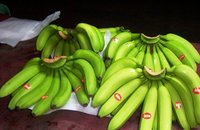
    Do you know your banana cultivars?

    There are many banana cultivars grown in the Philippines and whenever we encounter bananas in the marketplace, we always keep on asking what banana cultivar we are buying. It is time for us to learn more about the bananas we commonly find in the market so we can distinguish one from the other.

    'CAVENDISH'


    This is the usual banana for export. This banana cultivar is widely grown in Latin America, Africa and Southeast Asia and constitute the bulk of dessert bananas on the shelves of Western supermarkets. The fruit has a greenish-yellow peel when ripen under normal temperature. The pulp is white to cream, soft, fine-textured, and sweet.

    'LAKATAN'

    banana1.jpg

    The 'Lakatan' cultivar is the typical bananas we found in the market for dessert. It has an attractive golden yellow color when ripe. The skin can be removed easily with some rags sticking to the pulp, revealing a light orange to orange pulp. The cultivar has a very aromatic and excellent flavor. Fruit size ranges from 10 to 20 cm in length.


    'LATUNDAN'

    banana2.jpg
    This cultivar has a small to medium-size (10-15 cm in length) fruit, usually smaller than the 'Lakatan'. It is also common in the market and even in small fruit stands and store. The fruit is sweet with a mild sub-acid taste, fine texture and a delicious pleasant flavor. The fruit has also a yellow peel when ripe but its white pulp color distinguishes it from 'Lakatan' (light orange pulp).


    'BUNGULAN'

    banana5.jpg
    The cultivar has a distinctly light green to greenish-yellow fruit peel when ripe. The pulp is white to cream, soft, fine-textured and sweet. Its fruit is about 15 to 25 cm in length with a diameter ranging from 2 to 2.5 cm and usually smaller than the 'Cavendish' variety.


    'SABA'

    banana3.jpg
    If you like banana chips, then you should be familiar with this cultivar which is the one usually used to prepare this crunchy snack. 'Saba' is the cultivar used for cooking. The fruit is large and angular even when ripe. It has a white pulp which is sweet when ripe although very starchy. 'Banana cue' everyone?


    source: The Philippine Recommends for Banana (PCARRD Technical Bulletin 65)
    photos from primer.ph and alibaba.com

    Dried banana fritters

    Ingredients

    Dried banana slices (100 g)
    Egg yolk (1 pc)
    Sugar, granulated (6.5 g)
    Salt (1 g)
    Oil for frying

    1. Cover dried banana slices with water.
    2. Soak for 1 to 2 hours then drain.
    3. In another bowl, beat egg yolk.
    4. Add flour, salt, water, banana, and sugar.
    5. Beat until thick.
    6. Fry by tablespoonfuls until golden brown.

    source: The Philippines Recommends for Banana (PCARRD Technical Bulletin Series 65)
    photo from: www.livestrong.com
    Related Posts Plugin for WordPress, Blogger...